Best UI/UX Resources for Teams (2026 Decision Guide)
Published on 3/2/2026
Last reviewed on 3/2/2026
By The Stash Editorial Team
UI/UX Resources shortlist with fact/inference/recommendation framing, explicit tradeoffs, and source-backed implementation guidance for 2026.
Research snapshot
Read time
~11 min
Sections
18 major sections
Visuals
6 total (3 infographics)
Sources
12 cited references
Quick answer (2026-03-02): which ui/ux resources options should teams shortlist now?
Shortlist tools that show clear implementation signals, predictable maintenance burden, and explicit integration paths. The safest picks tend to be the ones with observable implementation clarity and realistic maintenance costs. This guide is decision-first and optimized for high-intent evaluation workflows.
Quick verdict by scenario
Fact (2026-03-02): No single ui/ux resources option consistently wins every workflow. Teams generally perform better with workflow-specific primary tools and one fallback path.
- Recommendation: Choose TextFX first when design systems teams; frontend developers building reusable ui patterns.
- Recommendation: Choose bunny.net - The Global Edge Platform that truly Hops first when design systems teams; frontend developers building reusable ui patterns.
- Recommendation: Choose nocode.gallery first when design systems teams; frontend developers building reusable ui patterns.
- Recommendation: Choose Splitter Cloneable #1 - Delta Clan - Webflow first when design systems teams; frontend developers building reusable ui patterns.
- Recommendation: Choose Launch Platform For Your Tiny Startups | Schedule Your Tiny Launch first when design systems teams; frontend developers building reusable ui patterns.
Inference: A primary-plus-fallback operating model usually reduces continuity risk when pricing, policy, or reliability conditions change.
Internal paths: /category/ui-ux-resources | /latest | /collections | /compare | /alternatives
Related guides: /collections | /compare
Authority brief and decision context
Fact (2026-03-02): Search intent is decision-stage evaluation for ui/ux resources with near-term implementation pressure.
Reader job-to-be-done: choose a tool that improves delivery speed without adding unbounded operational complexity.
Primary failure risk: selecting a tool on feature demos alone and discovering integration friction after rollout.
Topic coverage map for ui/ux resources
Inference: Decision-stage content is most useful when it spans architecture, adoption, governance, economics, and execution risk rather than only feature snapshots.
- Integration risk and rollout sequencing
- Governance and ownership model
- Cost visibility and procurement controls
- Migration and rollback planning
- Operational reliability and incident handling
- Training and adoption design
- Measurement model and KPI alignment
- Long-term maintainability
Market evidence and visuals (2026-03-02)
Fact (2026-03-02): The visuals below are sourced from first-party benchmark reports to anchor this ui/ux resources evaluation in external evidence, not opinion alone.
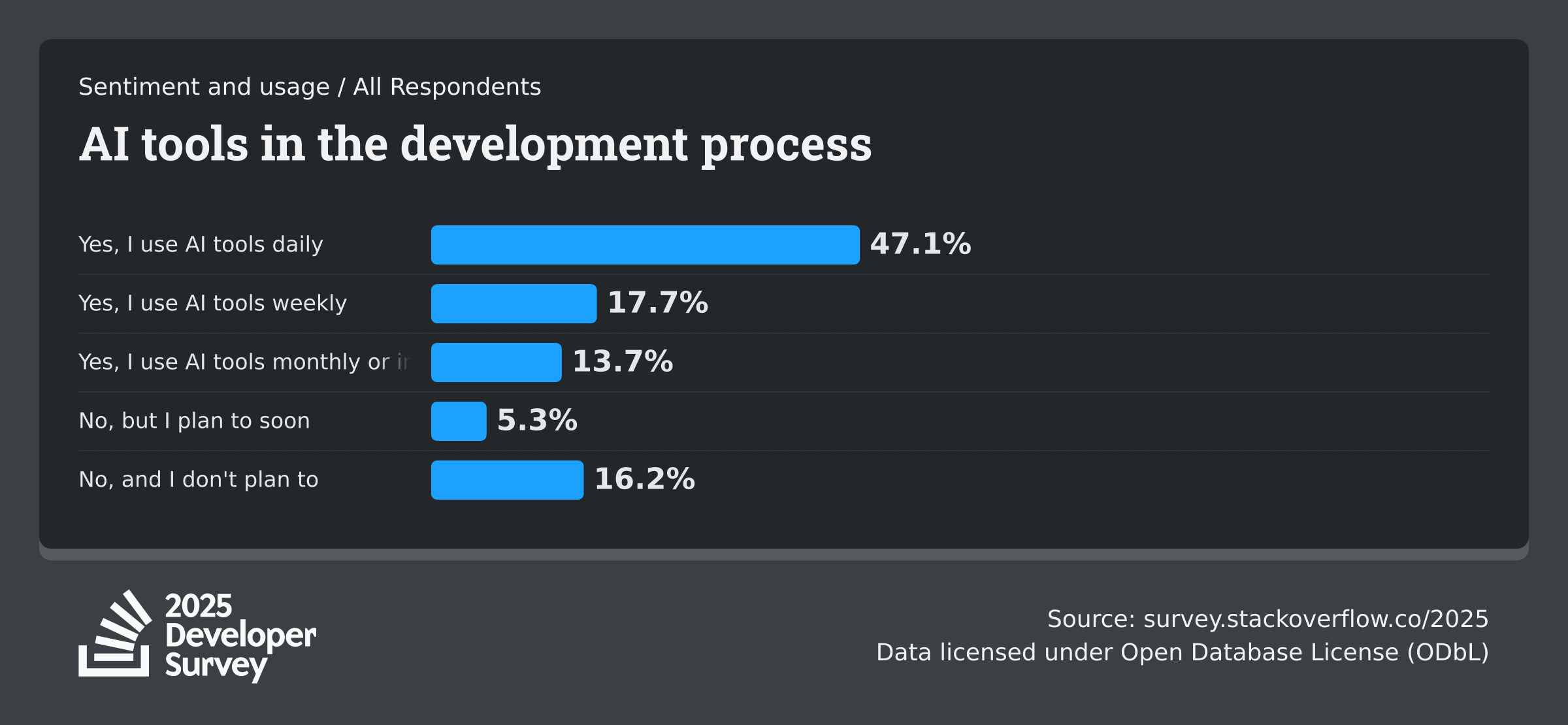
Stack Overflow - Developer Survey 2025 (AI)
Fact (2025-07-29): Annual developer sentiment dataset covering AI adoption, trust, and workflow impact.
GitHub - Octoverse 2025
Fact (2025-11-06): State-of-development report tracking developer growth and AI project adoption.

Google Cloud / DORA - DORA Report 2025
Fact (2025-01-01): Software delivery research on AI usage, platform engineering maturity, and delivery performance.

Evaluation criteria used in this draft
- Implementation effort and migration risk
- Integration depth across existing stack
- Time-to-value for first production workflow
- Governance controls and auditability
- Long-term maintenance overhead and roadmap clarity
- Commercial risk (pricing volatility and lock-in)
- Evidence quality and source freshness for every critical claim
- Operational readiness: ownership, onboarding, and incident response expectations
- Security/compliance mapping completeness before scaled rollout
- Internal link policy: include /collections, /compare, /alternatives, /latest in every decision guide.
UI/UX Resources candidates and tradeoff analysis
1. TextFX
Fact (2026-03-02): TextFX positions itself as follows: TextFX
Inference: Based on current metadata signals, TextFX is likely to perform best when design systems teams; frontend developers building reusable ui patterns
Recommendation: Pilot TextFX in one live workflow first, then scale only if adoption metrics and defect rates improve against baseline.
- Strength: Fits developer-first execution paths without heavy UI overhead
- Constraint: Documentation depth is not obvious from first-pass signals
- Integration check: Confirm whether automation hooks exist or if workarounds are needed.
- Governance check: Define access controls, data-retention boundaries, and audit expectations before launch.
- Not ideal for: Teams that cannot support process changes during the evaluation window.
Source URL: https://textfx.withgoogle.com
2. bunny.net - The Global Edge Platform that truly Hops
Fact (2026-03-02): bunny.net - The Global Edge Platform that truly Hops positions itself as follows: Hop on bunny.net and speed up your web presence with the next-generation Content Delivery Service (CDN), Edge Storage, and Optimization Services at any scale.
Inference: Based on current metadata signals, bunny.net - The Global Edge Platform that truly Hops is likely to perform best when design systems teams; frontend developers building reusable ui patterns
Recommendation: Pilot bunny.net - The Global Edge Platform that truly Hops in one live workflow first, then scale only if adoption metrics and defect rates improve against baseline.
- Strength: Shows enough implementation signal to justify a scoped pilot
- Constraint: Documentation depth is not obvious from first-pass signals
- Integration check: Confirm whether automation hooks exist or if workarounds are needed.
- Governance check: Define access controls, data-retention boundaries, and audit expectations before launch.
- Not ideal for: Teams that cannot support process changes during the evaluation window.
Source URL: https://bunny.net
3. nocode.gallery
Fact (2026-03-02): nocode.gallery positions itself as follows: Nocode.gallery resource
Inference: Based on current metadata signals, nocode.gallery is likely to perform best when design systems teams; frontend developers building reusable ui patterns
Recommendation: Pilot nocode.gallery in one live workflow first, then scale only if adoption metrics and defect rates improve against baseline.
- Strength: Fits developer-first execution paths without heavy UI overhead
- Constraint: Documentation depth is not obvious from first-pass signals
- Integration check: Confirm whether automation hooks exist or if workarounds are needed.
- Governance check: Define access controls, data-retention boundaries, and audit expectations before launch.
- Not ideal for: Teams that cannot support process changes during the evaluation window.
Source URL: https://nocode.gallery
4. Splitter Cloneable #1 - Delta Clan - Webflow
Fact (2026-03-02): Splitter Cloneable #1 - Delta Clan - Webflow positions itself as follows: Introducing Splitter - the customizable before-after slider tool that allows you to showcase your content in a whole new way. Say goodbye to limited options and outdated libraries, and hello to complete control over your before-after sliders. With Splitter, yo
Inference: Based on current metadata signals, Splitter Cloneable #1 - Delta Clan - Webflow is likely to perform best when design systems teams; frontend developers building reusable ui patterns
Recommendation: Pilot Splitter Cloneable #1 - Delta Clan - Webflow in one live workflow first, then scale only if adoption metrics and defect rates improve against baseline.
- Strength: Fits developer-first execution paths without heavy UI overhead
- Constraint: Documentation depth is not obvious from first-pass signals
- Integration check: Confirm whether automation hooks exist or if workarounds are needed.
- Governance check: Define access controls, data-retention boundaries, and audit expectations before launch.
- Not ideal for: Teams that cannot support process changes during the evaluation window.
Source URL: https://webflow.com/made-in-webflow/website/dc-splitter
5. Launch Platform For Your Tiny Startups | Schedule Your Tiny Launch
Fact (2026-03-02): Launch Platform For Your Tiny Startups | Schedule Your Tiny Launch positions itself as follows: Tiny Startups resource
Inference: Based on current metadata signals, Launch Platform For Your Tiny Startups | Schedule Your Tiny Launch is likely to perform best when design systems teams; frontend developers building reusable ui patterns
Recommendation: Pilot Launch Platform For Your Tiny Startups | Schedule Your Tiny Launch in one live workflow first, then scale only if adoption metrics and defect rates improve against baseline.
- Strength: Fits developer-first execution paths without heavy UI overhead
- Constraint: Documentation depth is not obvious from first-pass signals
- Integration check: Confirm whether automation hooks exist or if workarounds are needed.
- Governance check: Define access controls, data-retention boundaries, and audit expectations before launch.
- Not ideal for: Teams that cannot support process changes during the evaluation window.
Source URL: https://www.tinystartups.com
6. Wized - Build apps in Webflow
Fact (2026-03-02): Wized - Build apps in Webflow positions itself as follows: Wized resource
Inference: Based on current metadata signals, Wized - Build apps in Webflow is likely to perform best when design systems teams; frontend developers building reusable ui patterns
Recommendation: Pilot Wized - Build apps in Webflow in one live workflow first, then scale only if adoption metrics and defect rates improve against baseline.
- Strength: Fits developer-first execution paths without heavy UI overhead
- Constraint: Documentation depth is not obvious from first-pass signals
- Integration check: Confirm whether automation hooks exist or if workarounds are needed.
- Governance check: Define access controls, data-retention boundaries, and audit expectations before launch.
- Not ideal for: Teams that cannot support process changes during the evaluation window.
Source URL: https://www.wized.com
7. Framer - Before & After Image Slider
Fact (2026-03-02): Framer - Before & After Image Slider positions itself as follows: Learn how to add a beautiful before and after image slider to your Framer projects. Customize all aspects including handles and labels directly in Framer.
Inference: Based on current metadata signals, Framer - Before & After Image Slider is likely to perform best when design systems teams; frontend developers building reusable ui patterns
Recommendation: Pilot Framer - Before & After Image Slider in one live workflow first, then scale only if adoption metrics and defect rates improve against baseline.
- Strength: Fits developer-first execution paths without heavy UI overhead
- Strength: Better coordination potential for multi-role delivery teams
- Constraint: Documentation depth is not obvious from first-pass signals
- Integration check: Confirm whether automation hooks exist or if workarounds are needed.
- Governance check: Define access controls, data-retention boundaries, and audit expectations before launch.
- Not ideal for: Teams that cannot support process changes during the evaluation window.
Source URL: https://before-after-slider.framer.website
8. PhantomBuster
Fact (2026-03-02): PhantomBuster positions itself as follows: Phantombuster resource
Inference: Based on current metadata signals, PhantomBuster is likely to perform best when design systems teams; frontend developers building reusable ui patterns
Recommendation: Pilot PhantomBuster in one live workflow first, then scale only if adoption metrics and defect rates improve against baseline.
- Strength: Fits developer-first execution paths without heavy UI overhead
- Constraint: Documentation depth is not obvious from first-pass signals
- Integration check: Confirm whether automation hooks exist or if workarounds are needed.
- Governance check: Define access controls, data-retention boundaries, and audit expectations before launch.
- Not ideal for: Teams that cannot support process changes during the evaluation window.
Source URL: https://phantombuster.com
Integration and deployment reality checks
Inference: Most rollout failures occur at the integration layer (ownership gaps, weak fallback behavior, and missing review controls), not at the prompt layer.
- Recommendation: Define task-level prompt contracts for production-impacting workflows before enabling broad usage.
- Recommendation: Require human approval gates for changes that can affect production reliability, security, or billing.
- Recommendation: Log model/provider metadata for accepted outputs so review decisions are auditable.
- Recommendation: Maintain one fallback path and test failover behavior before full-team rollout.
Role-based recommendation paths
Engineering leaders
Fact (2026-03-02): Engineering leaders typically optimize for reliability, maintainability, and time-to-value under delivery pressure.
Recommendation: For ui/ux resources, run scoped pilots with explicit rollback criteria and weekly instrumentation reviews before org-wide rollout.
Product and ops owners
Inference: Product and operations owners benefit most when tools reduce coordination overhead and shorten feedback loops between teams.
Recommendation: Require a clear owner, onboarding plan, and adoption rubric before approving expanded spend.
Security and governance stakeholders
Inference: Security teams generally need evidence of policy controls, access boundaries, and data handling paths before sign-off.
Recommendation: Complete a policy mapping checklist and document unresolved gaps prior to production rollout.
Execution plan and operating checklist
Days 1-30: baseline and pilot design
- Define baseline metrics (cycle time, defect escape rate, adoption rate, and support load).
- Run one bounded production pilot with clear success and rollback thresholds.
- Capture integration blockers, manual workarounds, and security questions in one backlog.
Days 31-60: controlled expansion
- Expand to a second workflow only after first-pilot KPIs show measurable improvement.
- Harden onboarding docs, usage guardrails, and incident playbooks from pilot learnings.
- Review commercial terms against projected usage to avoid surprise spend growth.
Days 61-90: governance and scale readiness
- Formalize ownership model, review cadence, and escalation paths for critical failures.
- Document migration path and fallback plan if pricing, roadmap, or reliability changes materially.
- Publish adoption scorecard and decision log for leadership visibility.
Cost model: optimize accepted outcomes, not raw prompt spend
Fact (2026-02-23): Low per-call pricing can still create higher total cost if acceptance rates are weak and review/rework overhead grows.
- Cost per accepted implementation change
- Cost per resolved debugging incident
- Prompt-to-merge cycle time
- Human rework time per accepted output
- Acceptance ratio by workflow domain
Source quality and citation policy
Fact (2026-03-02): This draft prioritizes first-party product documentation, official benchmark reports, and attributed visuals from high-authority domains.
- Every embedded visual includes alt text, source label, and source URL attribution.
- Time-sensitive statements use absolute dates and should be re-verified before publication.
- Unattributed social claims and low-authority aggregators are excluded from decision-critical sections.
- Policy: Use first-party docs, official benchmark reports, and attributed visuals for decision-critical claims. Re-verify time-sensitive claims before publication.
Common mistakes to avoid
- Selecting one tool globally before workflow-level validation.
- Approving rollout without baseline metrics and explicit success/failure thresholds.
- Ignoring fallback strategy and continuity planning for provider shifts.
- Comparing token pricing only, without tracking acceptance quality and rework overhead.
- Running pilots without assigning clear owner accountability and governance controls.
Where recommendations can fail
- Failure mode: no baseline metrics before pilot, making improvement claims unverifiable.
- Failure mode: rollout to entire org before validating integration reliability in one workflow.
- Failure mode: procurement decision made without ownership for maintenance and onboarding.
- Failure mode: ignoring migration plan if pricing or roadmap changes materially.
Implementation sequence (30/60/90 days)
Recommendation: Days 1-30 should define baseline metrics and run one scoped pilot with weekly review checkpoints.
Recommendation: Days 31-60 should expand to a second workflow only if pilot metrics improve and rollback path remains viable.
Recommendation: Days 61-90 should formalize governance, training, and cost controls before wider rollout.
Final recommendation
Inference: Teams that treat tool selection as an operational decision, not a novelty decision, usually see better long-term outcomes.
Recommendation: Publish this shortlist with sourced visuals, explicit tradeoff notes, and a freshness timestamp, then rerun validation before every major content refresh.
Methodology and source freshness
Fact (2026-03-02): Sources in this draft are first-party links captured during the current research cycle.
Fact (2026-03-02): Time-sensitive claims should be re-verified on 2026-03-02 before publication, including benchmark visuals and cited metrics.
FAQ
Is there one universal winner in ui/ux resources?
No. Recommendation: assign primary tools by workflow domain, then keep one fallback option for continuity.
Should we standardize on one option for every team?
Inference: Standardizing too early can reduce adaptability. Most organizations perform better with a controlled primary-plus-fallback model.
How often should this comparison be refreshed?
Fact (2026-02-23): Re-validate quarterly, and also after major product updates, pricing changes, or policy shifts.
What should we measure during pilot evaluation?
Recommendation: measure accepted output quality, rework time, cycle-time impact, and governance fit by workflow.
Next Best Step
Get one high-signal tools brief per week
Weekly decisions for builders: what changed in AI and dev tooling, what to switch to, and which tools to avoid. One email. No noise.
Protected by reCAPTCHA. Google Privacy Policy and Terms of Service apply.
Or keep reading by intent
Sources & review
Reviewed on 3/2/2026
- TextFX official site
- bunny.net - The Global Edge Platform that truly Hops official site
- nocode.gallery official site
- Splitter Cloneable #1 - Delta Clan - Webflow official site
- Launch Platform For Your Tiny Startups | Schedule Your Tiny Launch official site
- Wized - Build apps in Webflow official site
- Framer - Before & After Image Slider official site
- PhantomBuster official site
- Google AppSheet | Build apps with no code official site
- ui.sh official site
- Stack Overflow: Developer Survey 2025 (AI)
- GitHub: Octoverse 2025